Iris Simon · 22 September 2026
Strategic Metadata Frameworks for Organizing Thematic Knowledge Bases in Independent Online Ventures
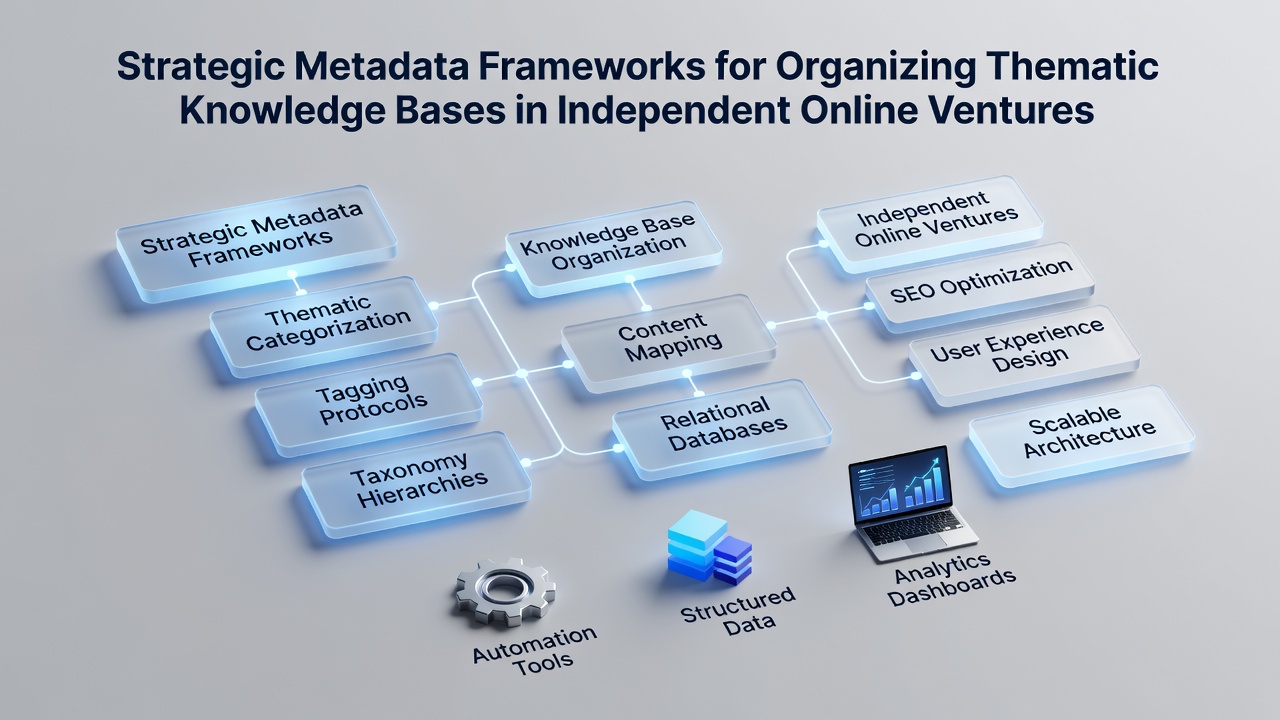
Independent online ventures rely on structured approaches to manage growing collections of content, and strategic metadata frameworks provide the foundation for organizing thematic knowledge bases in ways that support discovery, retrieval, and long-term maintenance. These frameworks consist of standardized schemas, vocabularies, and encoding practices that assign descriptive, structural, and administrative information to digital resources.
Core Components of Metadata Frameworks
Metadata frameworks operate through layered sets of elements that capture different aspects of content, such as subject classifications, authorship details, creation dates, and relational links between topics. Researchers at academic institutions have documented how these layers interact within knowledge bases to reduce duplication and improve cross-referencing across thematic categories. Observers note that independent operators often combine multiple frameworks rather than relying on a single standard, because thematic sites frequently span diverse subjects that require both general and domain-specific descriptors.
Common elements include title fields, keyword tags, and hierarchical category assignments, while more advanced implementations incorporate controlled vocabularies and persistent identifiers. Studies conducted across multiple regions show that consistent application of these elements correlates with higher indexing accuracy in search systems and better internal navigation for users exploring specialized topics.
Established Standards and Their Adaptation
Frameworks such as Dublin Core, SKOS, and RDF form the basis for many implementations, each offering different strengths for thematic organization. Dublin Core supplies a minimal set of fifteen elements that independent ventures apply to blog posts, resource pages, and reference materials. SKOS extends this capability by defining relationships between concepts, allowing knowledge bases to represent broader, narrower, and related terms within a thematic domain. RDF supplies the underlying graph structure that enables machine-readable connections across distributed content collections.
Those who manage independent sites frequently extend these standards with Schema.org markup to enhance visibility in web search results. Data from the European Commission indicates that adoption of combined schema approaches increased structured data usage among small-scale digital projects between 2023 and 2025. What's interesting is how these extensions allow ventures to maintain compatibility with broader web ecosystems while tailoring descriptors to niche subjects.
Implementation Patterns in Independent Ventures
Independent operators typically begin by auditing existing content to identify recurring themes and gaps in descriptive information. They then select a core framework and map local terminology to standardized terms, creating custom extensions only when necessary. Case examples from university-affiliated digital projects reveal that incremental rollout, starting with high-traffic sections, produces more sustainable results than comprehensive overhauls.
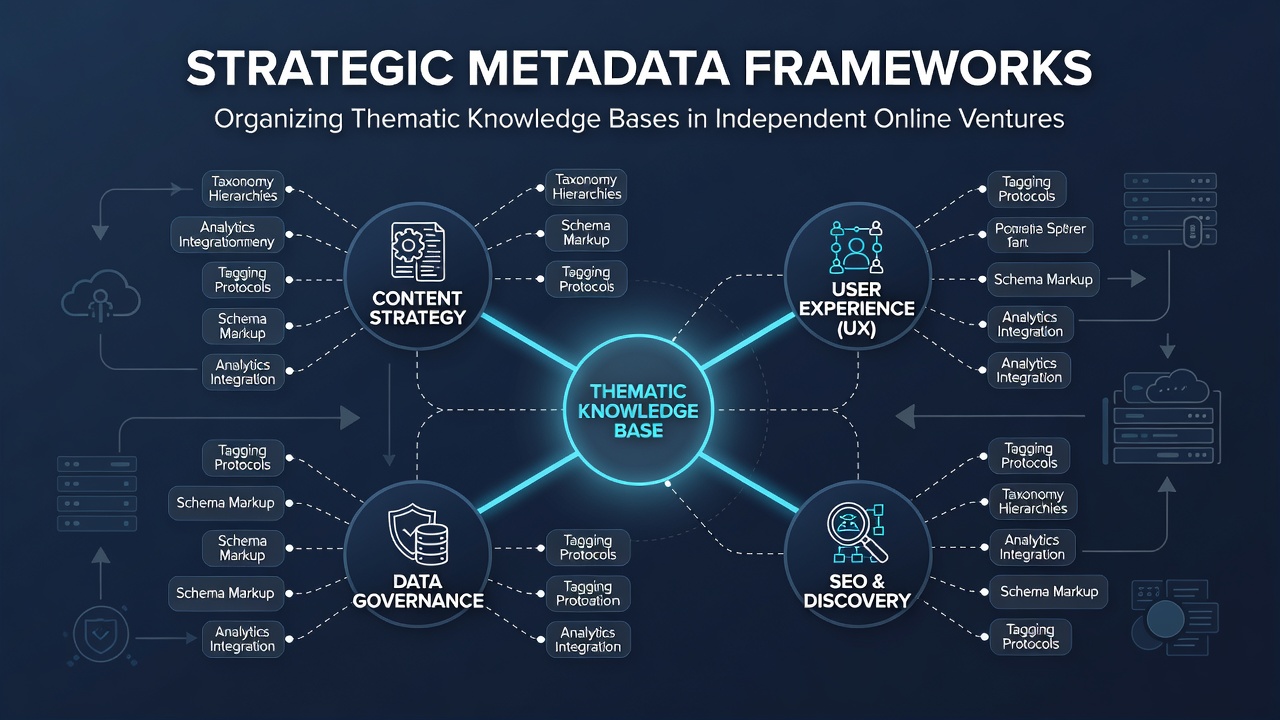
Automated tools assist with bulk tagging and validation, yet human review remains essential for maintaining accuracy in specialized vocabularies. Research from the Australian National Data Service highlights that projects incorporating regular metadata audits experienced fewer retrieval errors over multi-year periods. In September 2026, updates to several open-source content management plugins are scheduled to include improved validation features for RDF and SKOS integration, which may further streamline processes for smaller ventures.
Integration with Search and Discovery Systems
Once metadata is applied, it feeds into internal search indexes and external discovery mechanisms. Thematic knowledge bases benefit when metadata includes both human-readable labels and machine-readable URIs, enabling precise filtering by topic, date range, or content type. Industry reports from Canadian open government initiatives demonstrate that standardized metadata increases the findability of public datasets, a pattern that translates directly to independent online environments managing similar thematic collections.
Link analysis conducted by research teams shows that well-structured metadata also supports recommendation engines and related-content modules, which independent ventures use to guide users through connected themes. The ball remains in the court of site operators to choose frameworks that balance detail with maintenance overhead.
Maintenance and Scalability Considerations
Long-term viability depends on documented workflows for updating metadata when content evolves or new themes emerge. Observers have recorded that ventures maintaining version-controlled metadata records encounter fewer inconsistencies during site migrations or platform changes. Scalability improves when frameworks incorporate modular extensions that allow addition of new element sets without disrupting existing structures.
Training for contributors on metadata entry practices reduces error rates, according to findings from multiple institutional digital repository projects. Those who've studied this process note that clear guidelines paired with automated checks produce higher consistency across distributed teams.
Conclusion
Strategic metadata frameworks supply independent online ventures with systematic methods for organizing thematic knowledge bases, supporting both immediate usability and future growth. Through established standards adapted to specific needs, these approaches enable clearer navigation, improved search performance, and more reliable content relationships across specialized digital spaces. Continued refinement of tools and validation methods continues to lower barriers for smaller operators seeking to implement durable organizational structures.