Harper Peters · 20 October 2026
Integrating Chronological Sequencing With Visual Mapping to Archive Evolving Resource Collections in Solo Digital Projects
Researchers in digital preservation have documented methods that combine chronological sequencing with visual mapping to manage growing collections in independent projects, and these approaches allow creators to track additions over time while revealing relational patterns across materials. Data from archival studies shows that solo operators often handle expanding sets of notes, files, and references without institutional support, which creates a need for systems that maintain order through both time-based records and spatial representations.
Core Components of Chronological Sequencing
Chronological sequencing organizes resources by creation dates, modification timestamps, and sequential events, and this structure enables users to reconstruct the development path of a collection from initial entries to later expansions. Observers note that tools incorporating automatic date stamping and timeline views help maintain accuracy, whereas manual sorting often introduces inconsistencies that compound as collections scale. Studies conducted by institutions such as the National Library of Australia have indicated that date-ordered archives reduce retrieval time for historical layers within personal repositories, and this benefit appears particularly relevant for projects that accumulate content across multiple years.
Visual Mapping Techniques in Practice
Visual mapping translates resource relationships into node-link diagrams or spatial layouts where proximity and connections illustrate thematic clusters, and practitioners apply these maps to identify gaps or redundancies that linear lists overlook. Evidence from knowledge management reports reveals that color-coded or layered maps support quicker comprehension of collection evolution when paired with metadata tags, while standalone maps without temporal anchors can obscure the order in which ideas emerged. Those managing solo ventures frequently integrate mapping software with export functions that preserve layout data alongside original files.
Combining the Two Approaches for Evolving Collections
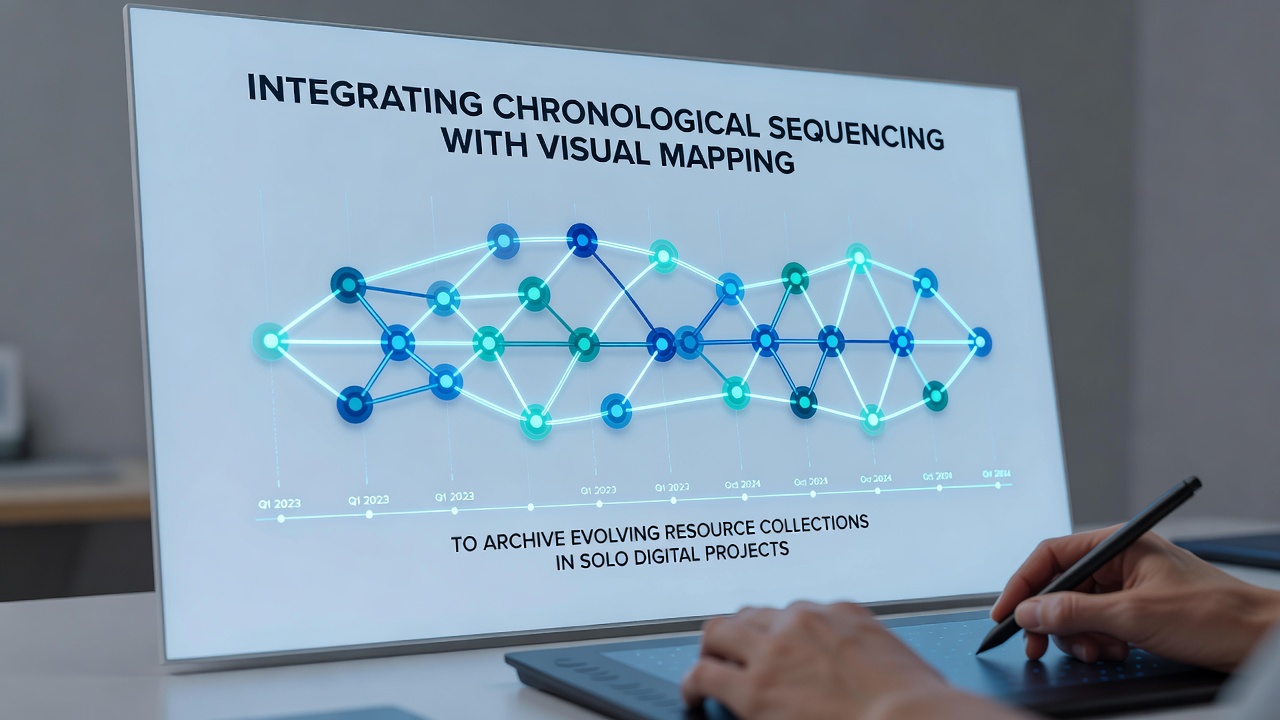
Integration occurs when timelines feed into map updates so that new entries appear both at their correct position on a chronological axis and as connected nodes within relational views, and this dual representation lets project leads review how early resources influence later additions without losing sight of overall structure. Research indicates that platforms supporting bidirectional links between date records and visual elements help prevent fragmentation, and case examples from independent digital archives demonstrate reduced duplication rates when such combined systems operate consistently. In October 2026, scheduled enhancements to several open-source mapping applications are expected to include improved timeline synchronization features that align with these practices.
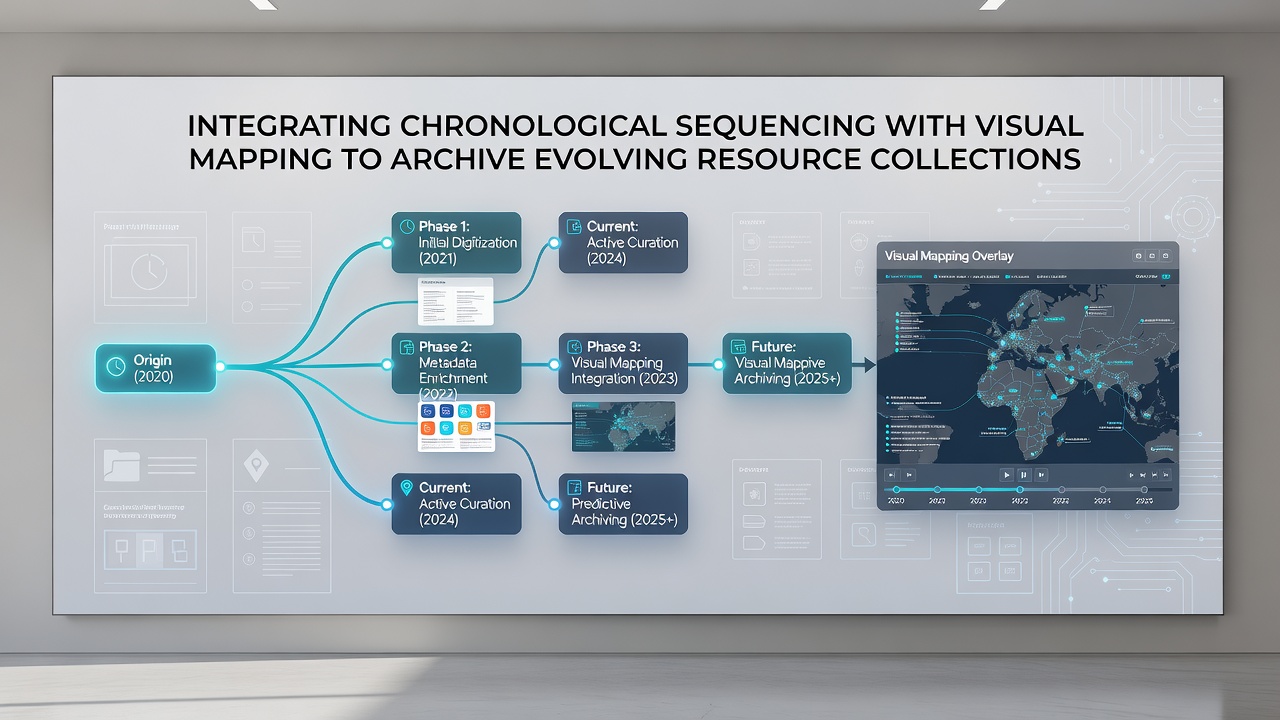
One documented workflow begins with importing dated files into a sequencing module that generates an interactive timeline, after which selected items transfer to a mapping canvas where users draw associations based on content analysis. This process supports ongoing maintenance because additions trigger automatic repositioning suggestions while preserving historical snapshots, adn data from pilot implementations shows measurable improvements in collection navigability over extended periods.
Practical Considerations for Solo Operators
Solo digital projects often operate with limited computational resources, and therefore methods that rely on lightweight file formats or browser-based tools tend to see broader adoption according to user surveys compiled by academic research groups. Metadata standards developed by organizations such as the European Commission on digital cultural heritage provide guidelines for embedding temporal and relational data directly into files, which facilitates seamless transfer between sequencing and mapping components. Those applying these standards report fewer compatibility issues during software migrations, and this stability proves valuable when collections span diverse media types including text, images, and structured data sets.
Backup protocols that capture both timeline states and map configurations at regular intervals further protect against data loss, while version control systems integrated with visual outputs allow reversion to earlier configurations without disrupting current views. Figures from preservation initiatives highlight that collections archived through combined sequencing and mapping retain higher accessibility scores during long-term audits compared with those using single-method approaches.
Conclusion
Integration of chronological sequencing and visual mapping supplies a structured yet flexible framework for archiving resources in solo digital projects, and ongoing developments in software compatibility continue to refine these techniques. Observers tracking adoption patterns note sustained interest among independent creators who require methods that scale with collection growth while preserving both temporal accuracy and relational insight.